Showing posts with label systems thinking. Show all posts

Monday, August 13, 2012

The Essence of a Marketing Requirements Document (MRD)

A few thoughts about writing MRDs.

NOTE: The MRD should describe WHAT needs to happen overall and between parts. The MRD should not (usually) describe HOW all the parts get implemented - that is for the engineering design document.


  1. Describe the end-to-end scope of the problem to be solved
  2. Break the problem into logical sub-problems
  3. Describe the inputs required to resolve each sub-problem. This includes:
    • human interfaces for data input 
      • one time 
      • interactive / iterative 
    • machine / data inputs from external data
    • machine / data inputs from internal (transient) data
  4. Describe what output should be generated by resolving each sub-problem. This includes:
    • which data is needed as "the" output. i.e. the "permanent" data. 
      • What is the expected input format of the consumer(s)?
    • which data is needed to address another sub-problem. i.e. transient data.
All of this should be written with an eye to the system in which the functionality described by the MRD lives.

  • Every input is the output of another system, ideally described by an MRD (reference it if you can).
  • Other systems may need the output of the system described by your MRD. Include these systems as examples in your MRD to give color to the bigger picture problem being solved.
  • Human input interfaces (User Interfaces), Machine Input interfaces (APIs) and Permanent Data stores (HDDs or Databases) may be shared between multiple systems. If they are, or should be, note that explicitly.
One obvious challenge, given the recursive approach to MRD writing given here, is figuring out where to stop.
How big should the scope of THE problem be?
My experience: when in doubt, make the scope too big. Then scale back the scope during reviews based on feedback from the stakeholders.

Friday, June 8, 2012

What is Agile Development an Answer to?

I got to thinking about some of the problems I see at work around software development & roadmap and decided to apply some systems thinking to the situation. This is the result.


The key learning:

  • Really good use case validation is probably the largest leverage point.
  • Agile development can be an alternative to really good use case validation.
No surprises there but it is interesting to see the dynamics that lead to those conclusions. The feedback loops suggest alternative paths to address the customer acceptance problem when neither use case validation improvements nor agile development are feasible. For example:
  • What if you refused to add late features and managed the initial urgency to gain product acceptance? As long as the gaps are fixed in the medium term, the improved roadmap credibility may be enough to gain acceptance in the face of gaps next time because the customer believes your roadmap claims.
  • If apps and product managers are failing to validate use cases sufficiently, can you increase scrutiny on requirements by engineering and increase insistence on complete test case details by SQC to minimize factors which cause schedule slips and perhaps offset the slips caused by feature adds?

Friday, December 31, 2010

Saving the Savages = Breaking the System

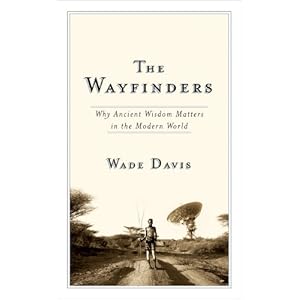
I just finished reading The Wayfinders - Why Ancient Wisdom Matters in the Modern World by Wade Davis. Besides being one of the best arguments I've read on why sustainability matters and where we might "relearn" how to achieve it, there was a section on the consequences, however well intended, of misunderstanding the context of a culture and of applying the wrong solution to a problem because of it.

The story is of the people of the Kasuit desert in northern Kenya. For hundreds of years, they lived in this desert. They developed a culture that embraced the difficulties of living in the desert and, therefore, did just fine. Until severe drought, combined with nearby wars brought this region to the attention of the West. At which point, the United Nations took actions to "save" them from themselves.
Following is my summary of Wade's story.

The culture the originally developed worked like this:

To ensure that enough livestock survived severe drought, large herds of livestock were required.
To maintain large herds required large families, stewardship of the land and a nomadic lifestyle (so that the carrying capacity of any one area was not exceeded).
The requirement to have large families resulted in polygamy being common. But to maintain social harmony among the young men in a group where there were not enough women for every man, the culture developed rites around sending young men away to tend the herds. These rites bound together the men involved in them, creating life-long social bonds which reinforced the "commonness" of their use of the land (avoiding the "tragedy of the commons"). These rites also instilled a large amount of prestige in the men, allowing them to accept the situation which supported the large families.

Then the UN intervened and added a few things:
First they added the idea of private ownership of the land and, thereby, permanent settlement. This required the reduction of herd size which quickly led to dependence of outside aid to keep the people alive.
Outside aid included western education. The education broke the traditional rites of passage (by instilling the idea that such a life was "beneath" an educated man), which broke the personal ties which were necessary, among the other factors, to allow life in the harsh environment.

The entire culture collapsed and, along with it, the ability to sustain life in that place.
All with the best intentions...
...but without sufficient respect for the wisdom of the people who had learned to live within the limits of the place they inhabited.

Thursday, July 1, 2010

A Framework for Sustainable Business

Sustainability
"The ability to provide for the needs of the world's current population without damaging the ability of future generations to provide for themselves. When a process is sustainable, it can be carried out over and over without negative environmental effects or impossibly high costs to anyone involved."
This definition is nice but how to make it actionable?
A checklist would be nice, but that is probably too simplistic. Rather, there seems to be a few key ideas that lead from this definition that give a framework for answering the question: "Is this sustainable?" in whatever context it might arise. The first question is: sustainable for whom? Which leads to...

Triple Bottom Line (TBL)
""People" (human capital) pertains to fair and beneficial business practices toward labour and the community and region in which a corporation conducts its business. A TBL company conceives a reciprocal social structure in which the well-being of corporate, labour and other stakeholder interests are interdependent."
""Planet" (natural capital) refers to sustainable environmental practices. A TBL company endeavors to benefit the natural order as much as possible or at the least do no harm and curtail environmental impact. "
""Profit" is the economic value created by the organisation after deducting the cost of all inputs, including the cost of the capital tied up."
To understand if something has unacceptable costs to anyone involved, you must first identify all of the stakeholders. The simplest embodiment of this idea is in the triple bottom line: Expanding accountability to the stakeholders rather than just the shareholders. Who are the stakeholders?
  • Your people
  • Your planet
  • Your profit (i.e. the economy in which you live and on which you depend).
Once you begin trying to account for all the stakeholders' costs and benefits you are led naturally to...

Full Cost Accounting (FCA)
  1. Accounting for costs rather than outlays
  2. Accounting for hidden costs and externalities
  3. Accounting for overhead and indirect costs
  4. Accounting for past and future outlays
  5. Accounting for costs according to lifecycle of the product

FCA requires explicit acknowledgement of costs that are typically ignored in traditional cost / benefit analyses. It requires systems thinking to understand the scope and source of these costs. The points of FCA that seem, to me, to be particularly relevant to sustainability are:
  • What does it really cost to obtain, use and replace a resource? Natural resource usage is a good example: prices reflect extraction costs rather than replacement costs (it's not sustainable if I run out with no replacement). So using resource price as the cost of resources is insufficient to account for the impact of using that resource. Oil is cheap to extract but difficult to replace.
  • Externalities are acknowledged as costs of business rather than someone else's problem. Passing the cost to someone else does not make the cost go away - it's just theft from that person. A good example is the effect of overworking employees. What is the cost of a crumbling family or of the loss of a parent from workplace induced illness or stress related disease? In traditional accounting, such concerns are not the business' concern so efforts to improve employee well-being are are difficult to justify.
  • Future outlays to deal with preventing externalities are also planned for. This encourages reuse and encourages building recycling and collection into the product design and business model. It is good business to have people buy a new cell phone every year, until you have to pay for the safe disposal of every one of those phones or the impact on health and environment loss from improperly disposed phones. Wouldn't it be more economically effective to plan on collecting and reusing the materials?

If you include in the costing the environment as the source of all resources and that a better environment results in more plentiful, higher quality, more productive resources (material and labor), then you reach...

Cradle to Cradle Design
"Cradle to Cradle design perceives the safe and productive processes of nature’s ‘biological metabolism’ as a model for developing a ‘technical metabolism’ flow of industrial materials. Product components can be designed for continuous recovery and reutilization as biological and technical nutrients within these metabolisms."

This is about making the world better with each unit produced rather than just making things "less bad."
While Cradle to Cradle emphasizes product design, to me the idea logically extends to sustainable business processes as well: How do I design a business process that makes my people and customers more fulfilled rather than just "less abused" in pursuit of the company's goals?

  • Trust marketing: respect your customers and their interests to build more business.
  • Foster and direct intrinsic motivation (Drive... see TED video below) to get the most from employees.


Put another way: sustainability seems to be about approaching business with Aikido in mind (blend and direct) rather than with Taekwondo in mind (block, strike and smash).

Monday, June 28, 2010

Sustainable vs Green

"Green" and "Sustainable" seem to be used as if they mean the same thing in mainstream media. However they are not the same:

Green but not sustainable:
Michael Pollan has a good example of this in his book The Omnivore's Dilemma: industrial organic food. The food is raised without artificial fertilizers or pesticides. However, it is raised in a giant monoculture. This means that a single disease could wipe out the entire crop. It also means that the land is not replenished by the crop growth so more and more fertilizers are needed to keep up yield.

Another example is in the common complaint about LEED not being green enough. I think, this could be a complaint about LEED not being as strong about sustainability as some might like. A recycled, refurbished, bright and airy building with solar panels constructed in the middle of nowhere is not sustainable to operate or for occupants to get to... yet it can still be LEED certified - a "green" building.

Sustainable but not green:
A small community raises pigs and chickens in a factory farm in addition to having a number of farms to supply food to the animals and people. The waste is rotated between a number of storage ponds where the land is severely polluted but the waste is broken down at a rate such that additional land is not required to contain it. The water supply is contaminated but sufficient rain falls that cachement supplies the required amount year-round. By having multiple animal types, a cull due to disease outbreak in one population does not result in a total loss of income or food supply.
This is, I will admit, a bit contrived but is within the realm of possibility for a small enough community without economic growth as a primary goal. It would be impossible to call this situation green but it, arguably, could be sustained.

The relationship between sustainability and green does exist. Namely that it is very hard for a planet of 6.8 billion people to be sustainable without being green because the environmental impact of our current technology is too high. To ensure that we can continue to live here, for human life to be "sustainable", our impact needs to be moderated. The best way we know to do that is by being "green."

It also highlights that "sustainability" is about the entire system. There cannot be "waste" and inputs cannot come exclusively from limited supplies when the population is too large. Or, as William McDonough puts it, "Waste equals food."

Maybe it is fair to say that the missing distinction is that sustainability requires systems thinking while green is about point solutions?

Wednesday, April 7, 2010

A Model of Sustainable Management : People

There are a few books and authors whose messages have resonated with me lately. I haven't stopped to consider what they have in common with each other or with my own interests until recently.
The books / authors are:
I've put together a picture of the key messages I took from each and how I see them as relating to each other.

Prof Griffith has a very useful model (TOP Management) for thinking about how business problems are solved most effectively by considering them in the context of Technological capabilities, Organizational structures and limitations and People's capabilities and motivations. I have used this as the overlay for my model.

Dan Pink has convincingly described how intrinsic motivation is key to increased productivity in the new work world. Central to fostering intrinsic motivation (Type I work) are mastery seeking behaviors, personally meaningful purpose and autonomy of task, time and team.

Seth Godin takes a slightly different approach to looking at motivation and the new world of work through the concept of the "linchpin." This is a person who, through mastery of subject (his "superpower"), through his ability to define his own roadmap regardless of outside pressures to "just do his job" and through his ability to motivate and lead teams towards those ends, becomes essential to the organization.

Peter Senge provides a framework derived from System Dynamics that emphasizes many of the same mastery and purpose aspects as previously mentioned though through a different lens: Personal Mastery (forever accepting that there is more to know), Mental Models (understanding that you have models in your head and that they may be incomplete or wrong) and Shared Vision (ensuring that everyone is basically working towards the same goals). He also emphasizes Dialog (real trading of ideas rather than just defending your own) and Team Learning (practicing for and reflecting on scenarios, not just reacting to them) as important organizational practices.
These disciplines sit on top of the discipline of systems thinking (the 5th discipline). Which Senge elaborates on to define as the analysis of how the parts relate to each other and thereby create the whole; often with unintended, but predictable, side-effects. This provides a nice link back to Prof Griffith's TOP management model which is, essentially, a systems model.

Wednesday, March 24, 2010

Mo' money, Mo' Money. Mo' Money.

A difficulty of the triple bottom line is the entrenched position that only profit matters. So justifying sustainability expenditures must occur in the context of return on investment (ROI). Redrawing the sustainability system diagram in terms of the profit aspect shows that not much actually changes:


Most of the considerations and feedback loops are still included because they all affect profitability in one way or another. However, since the focus is now on ROI, the message changes slightly to focus on comparing what each aspect costs vs what it brings. At a high level:

Contingency expenses vs Materials Cost
  • Does it add more in materials or procurement costs than it saves in insurance, continuity plans, taxes / cap & trade costs, relocation costs and opportunity costs (business disruptions)? 
  • Admittedly, the impact of one company on the overall environment is probably small which is why pricing the externalities helps (e.g. carbon pricing) as it focuses everyone on those externalized costs in a consistent, material way.
Utilities Costs vs Building Cost
Productivity Gains & Decreased Training Costs vs Building Costs
  • Does it cost more to add indoor environmental quality improvements (e.g. daylighting, thermal controls, exterior views, higher ventilation rates) than you gain through improved worker productivity and retention?
  • It helps to consider that payroll costs are generally a much larger fraction of business costs than facilities + real estate costs. So if you can spend 7% in building cost to improve productivity of payroll by 2%, you will still come out very much ahead. Something like:
    • For 1000 employees @ 250 sq. ft /ea in office space built in San Francisco is ~ $50M. Amortize over 30 years = $1.6M/yr. A 7% increase is ~$117k/yr.
    • For the same 1000 employees @ $150k/yr in payroll costs = $150M/yr. If you can improve productivity by 2%, that is ~$3M/yr.
    • ROI ~ 24.
So Mo'Money, Mo'Money, Mo'Money and sustainability really do get along.

Monday, March 22, 2010

Product positioning if you made a cleantech widget

In the last post, I used a system diagram to look at a picture of sustainability leverage points from the perspective of the owner. That can be turned around and used to look at the picture from the perspective of a cleantech vendor. Let's say someone like Redwood Systems who makes an LED lighting + sensor system that allows feedback to a building automation system.


Key messages can be tailored to the exact circumstances and interests of the building owner but two main themes seem to stand out around energy usage and environmental quality.

Reduced energy usage:
  • drives down operating costs 
    • Direct savings from the lower energy consumption of the lighting fixtures.
    • Indirect savings from the improved efficiency with which the fixtures, HVAC and process equipment can be operated based on feedback that the fine grained sensor network provides.
  • helps the planet and, thereby, your operating risks / costs
    • Reduced energy usage lowers the company's carbon footprint, reducing its impact on the environment.
    • A reduced carbon footprint, in addition to helping reduce the potential business continuity costs and impacts of climate change, also helps reduce potential liability for carbon tax or cap & trade costs.
Better control of environmental quality:
  • improves productivity and profits
    • Fine grained feedback control over the workspace allows for a more pleasant and, therefore, productive workplace. Even small increases in productivity provide large leverage when weighed against total payroll costs, especially for highly paid, specialized workers.
  • improves worker retention
    •  Deployed as part of a larger program for improved retention, having a comfortable workspace with a customizable, controllable environment decreases costs of turnover both in lost productivity and in direct training.

Saturday, March 20, 2010

A Big Picture of Sustainability

Where are some key leverage points in cleantech, green building and sustainable business?

This is a swag at the system, which captures, I think, some interesting connections and highlights some key leverage points.
Sustainability Systems Diagram

 Before your head explodes, the theory behind it:
  • A building owner's success is defined as a function of the triple bottom line (Planet, People, Profit).
  • There are a lot of factors behind each part of the bottom line and some of those factors affect multiple bottom lines.
  • Most factors are affected by several other factors. A few factors are "decisions." They gain their value because the owner decides to do them, not as the consequence of some other factor. These are marked in RED in the diagram.
In this post, I want to focus on the last point as I think these are key leverage points for sustainability.

Sustainable Sourcing and Sustainable Material
What materials you choose and where you get them from affects all three bottom lines:
  • Planet : unsustainable harvest of materials destroys habitats, kills species (which can further degrade habitats) and depletes resources.
  • Profit : resource depletion ultimately raises the cost of procuring materials. Habitat destruction increases the allocations you should make to account for and insurance costs you will likely bear due to losses associated with it (e.g. increased flooding, loss of location due to sea level rise or desertification, etc.)
  • People : habitat destruction ultimately limits the locations where you can run your business and that has a big impact on how your company runs (see below).
Feedback Control
How you manage your resource usage affects all three bottom lines:
  • Profit : Controlling usage to increase efficiency costs a little more to implement but can ultimately save significantly on direct operating expenses as well as on carbon costs (assuming a carbon tax or cap & trade are enacted). Good control of the indoor environmental quality also has positive impacts on worker productivity, increasing profits.
  • Planet : Increased efficiency of resource usage, especially for water or energy sources (coal, oil or land set aside for biofuel growth) helps offset resource depletion which, in turn, helps preserve habitats and species.
  • People : Good indoor environmental quality also increases retention, which reduces training costs and opportunity costs associated with head count gaps, thereby increasing profit.
Location
Where you locate your operations affects all three bottom lines:
  • People : Location has a large impact on lifestyle. Educational, entertainment, cultural options all depend highly on where you live and that depends, most of the time, on where you work. "Better" options lead to higher retention and ultimately lower costs. If a location is too expensive, dangerous or otherwise undesirable to live near, then commute times increase, negatively affecting work life balance, hurting retention.
  • Profit : More "desirable" locations tend to attract more educated, higher skilled workers. While hiring these people may cost more money, their productivity and quality of work increase profits (See this post for more thoughts on that idea). More "desirable" locations also tend to cost more money to locate in, increasing expenses which decrease profit, therefore requiring a careful consideration of worker quality available vs real estate costs (or requiring an alternative method of working).
  • Planet : Locating to environmentally sensitive or pristine locations can result in habitat destruction which cascades into species loss and resource loss.
This is only scratching the surface of the connections captured in this diagram. I expect to come back and explore this some more.

Thursday, March 4, 2010

Systems Thinking about a Problem at Work

This is an analysis of a situation I saw playing out at work. It revolved around off-shoring labor in an attempt to reduce costs having unintended consequences. In particular, one heroic worker was fixing incoming quality problems in an attempt to "be good" but was, in fact, making the problem worse by hiding the impact of the off-shoring decision.

See the embedded presentation below to step through the problem. I suspect this will look familiar...


I've used a systems dynamics based diagram to sketch out the factors and feedback. I've found this to be a very powerful approach for looking at complex problems to understand the underlying factors.

This site has a pretty good tutorial on how this works.